Types of Wardrobe Doors: Sliding, Hinged, Bi-Fold, and More Styles Explained
Wardrobes are more than just storage—they set the tone for your bedroom’s style and functionality. And one element that plays a key role in this transformation? The wardrobe doors. From traditional hinged doors to sleek sliding panels, the types of wardrobe doors you choose can make or break your interior design.
So, slide, swing, or fold? Let’s explore the most popular wardrobe door styles and find out which one matches your needs perfectly.
Why Wardrobe Door Choice Matters
Wardrobe doors are not just practical panels that conceal clothes—they influence the room’s ambience and usability.
- Aesthetic appeal – The right door style can enhance a room’s theme, whether it’s modern, rustic, or minimalist.
- Space efficiency – Certain designs work better in compact layouts, while others shine in spacious bedrooms.
- Practicality – Ease of access, durability, and maintenance are equally important.
Sliding Door Wardrobe Design
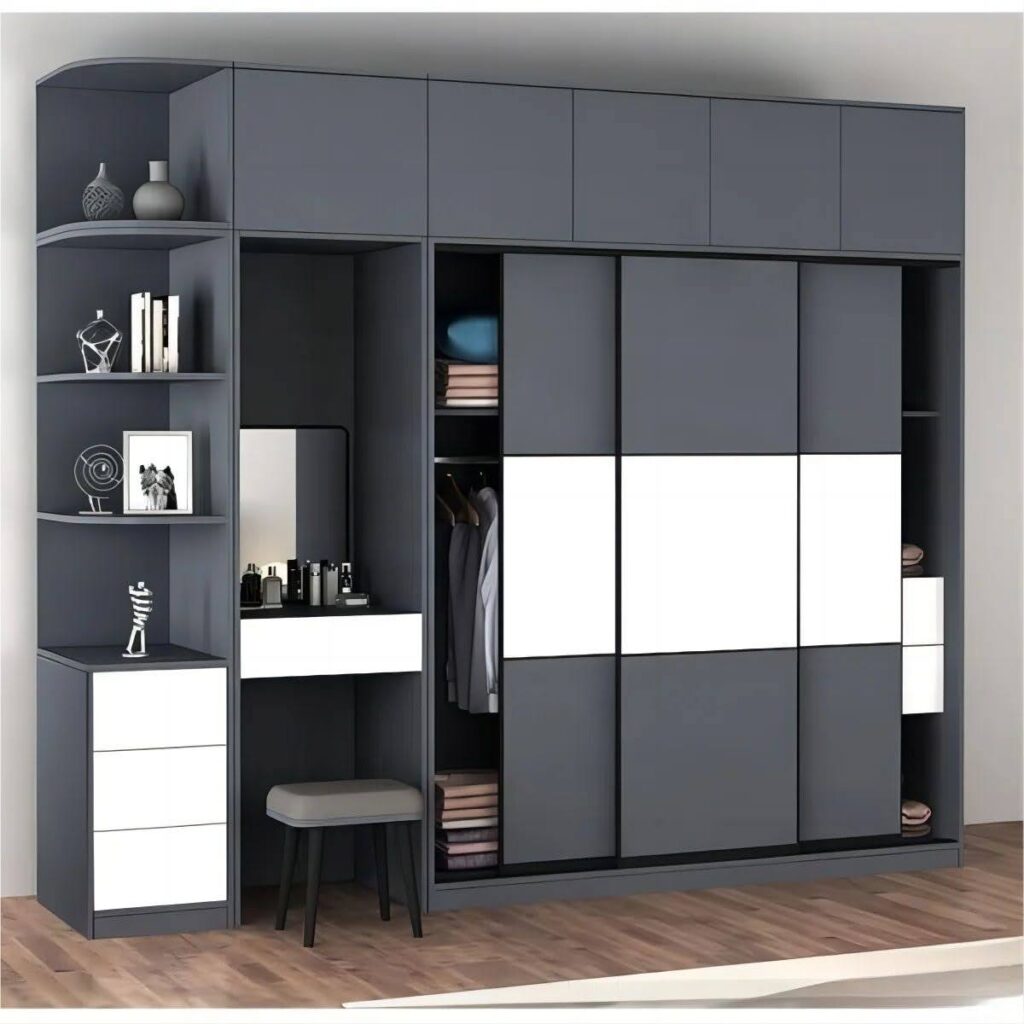
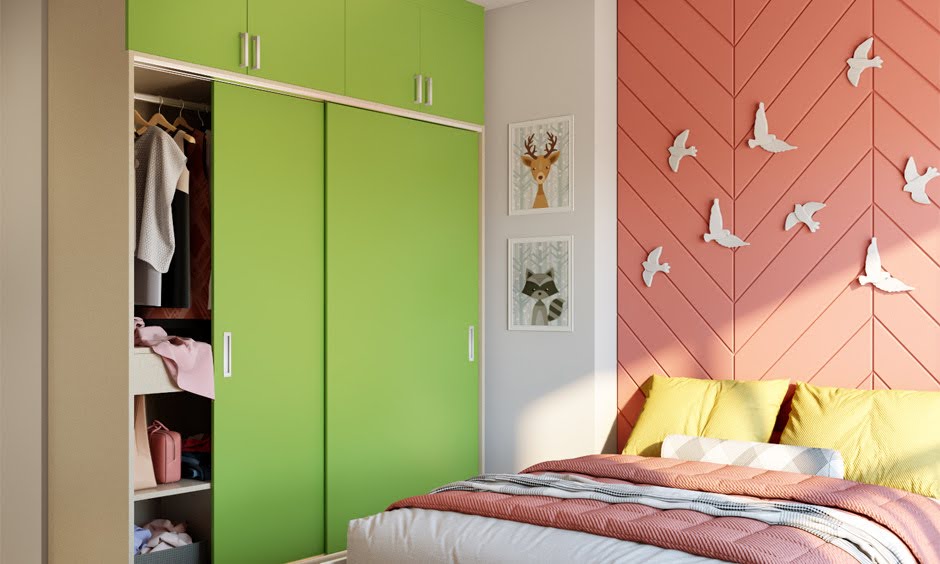
Among the most popular types of wardrobe doors, sliding doors are loved for their modern functionality. These doors glide on tracks and require no clearance space, making them perfect for small rooms.
Customisation options include:
- Mirrored panels to make the room appear larger
- Glossy finishes for contemporary interiors
- Natural wood textures for a warm, elegant look
If your goal is sleek design with space optimisation, sliding doors are a top choice.
Pocket Door Design for Compact Wardrobes
If space is at a premium, pocket doors are a clever solution. These slide into a hidden cavity in the wall, leaving your floor area completely free.
Why choose pocket doors?
- They work brilliantly in narrow or compact rooms
- Create a clean, minimalistic look
- Perfect for homeowners who love unobstructed, streamlined designs
Bi-Fold Wardrobe Door Design
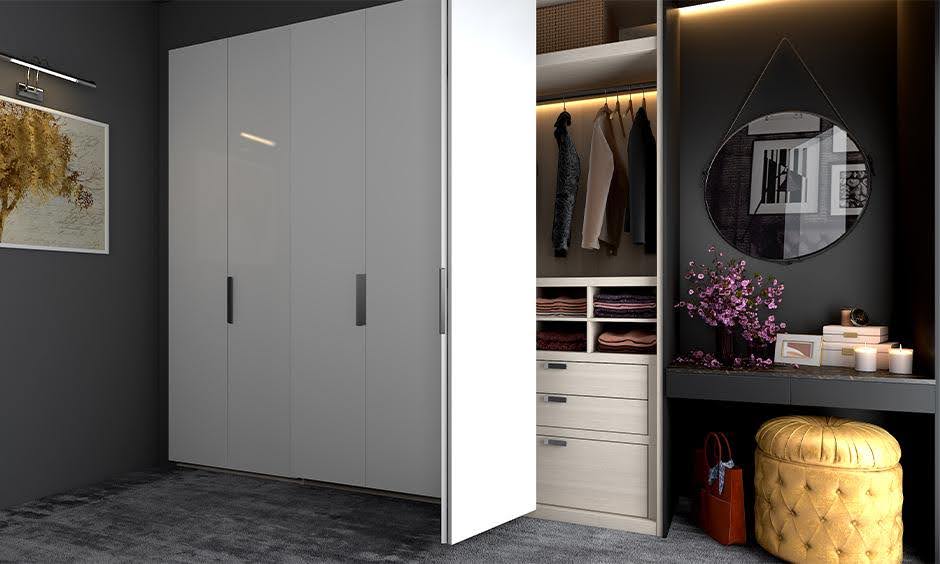
Bi-fold doors are a smart compromise between hinged and sliding doors. They fold neatly to one or both sides, requiring less floor space than hinged designs but still allowing wide access to your wardrobe.
Key highlights:
- Easy to operate
- Versatile style that blends with modern or transitional interiors
- Great for medium-sized rooms where full swing clearance is an issue
Pivot Wardrobe Doors
If you want your wardrobe to double as a design statement, pivot doors are a striking option. Instead of swinging on side hinges, these rotate on a central pivot, giving them a modern architectural edge.
Why go for pivot doors?
- They handle larger panels well
- Create a luxury look in designer interiors
- Offer a smooth, dramatic opening mechanism
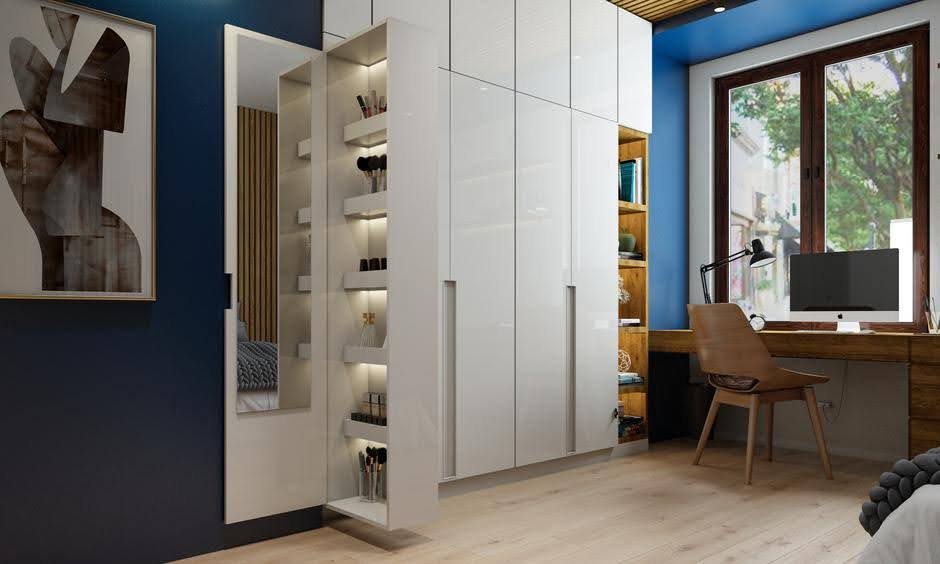
Classic Hinged Wardrobe Doors
Sometimes, nothing beats the classic. Hinged wardrobe doors are the timeless option that continues to dominate home interiors. They swing outward, offering full access to the wardrobe.
Pros:
- Simple to install and maintain
- Highly customisable (mirrors, panels, finishes)
- Ideal for spacious bedrooms
Cons:
- Require clearance space
- Less practical for compact rooms
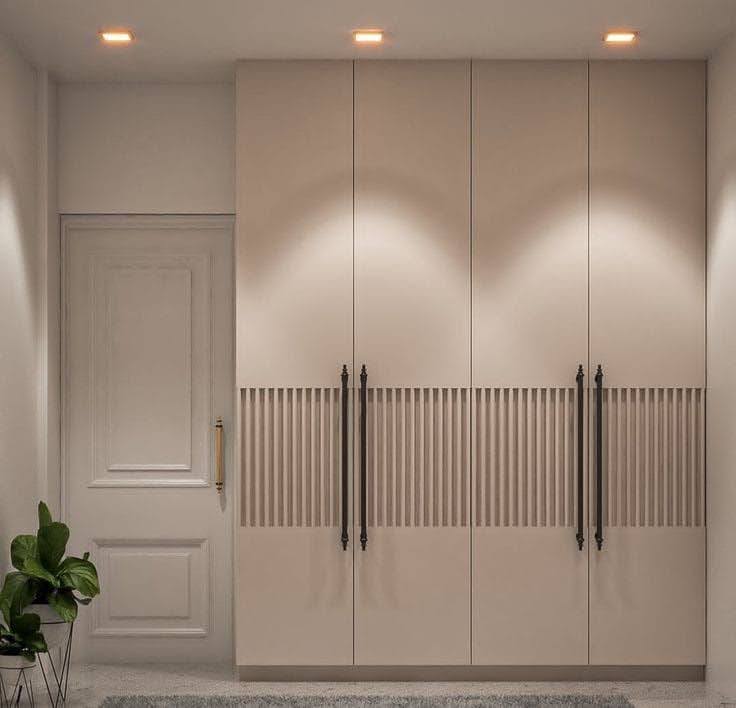
Mirrored Wardrobe Doors
Wardrobe + mirror = double utility. Mirrored doors are perfect for smaller bedrooms as they reflect light, making the space look larger.
Advantages:
- Serve as both storage cover and full-length mirror
- Enhance brightness in the room
Pair well with sliding or hinged mechanisms
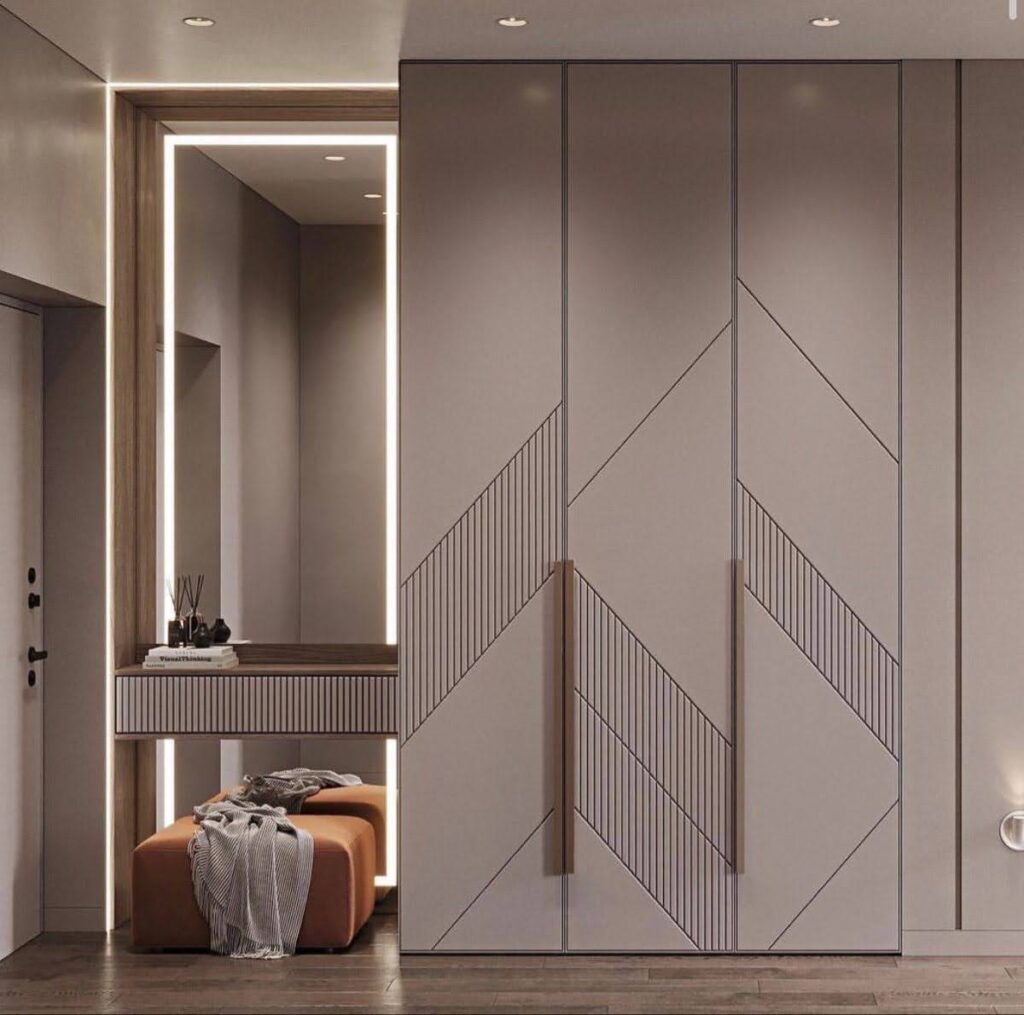
Glass Wardrobe Doors
For a contemporary, airy feel, glass wardrobe doors (clear, frosted, or tinted) bring in modern elegance.
Pros:
- Ideal for showcasing designer wardrobes
- Create a light, spacious vibe
- Easy to wipe clean
Cons:
- Need regular maintenance for fingerprints
Not suitable for messy wardrobes unless frosted/tinted
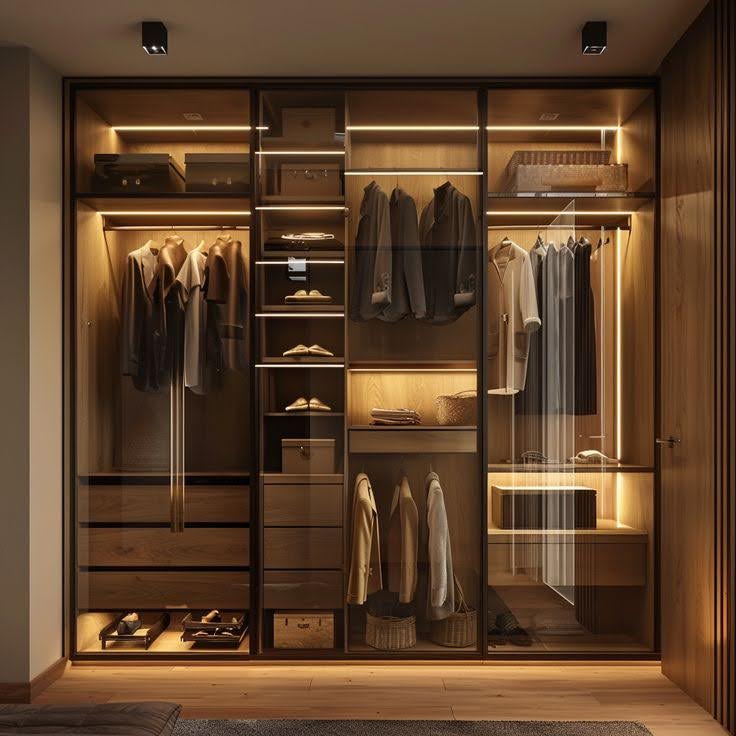
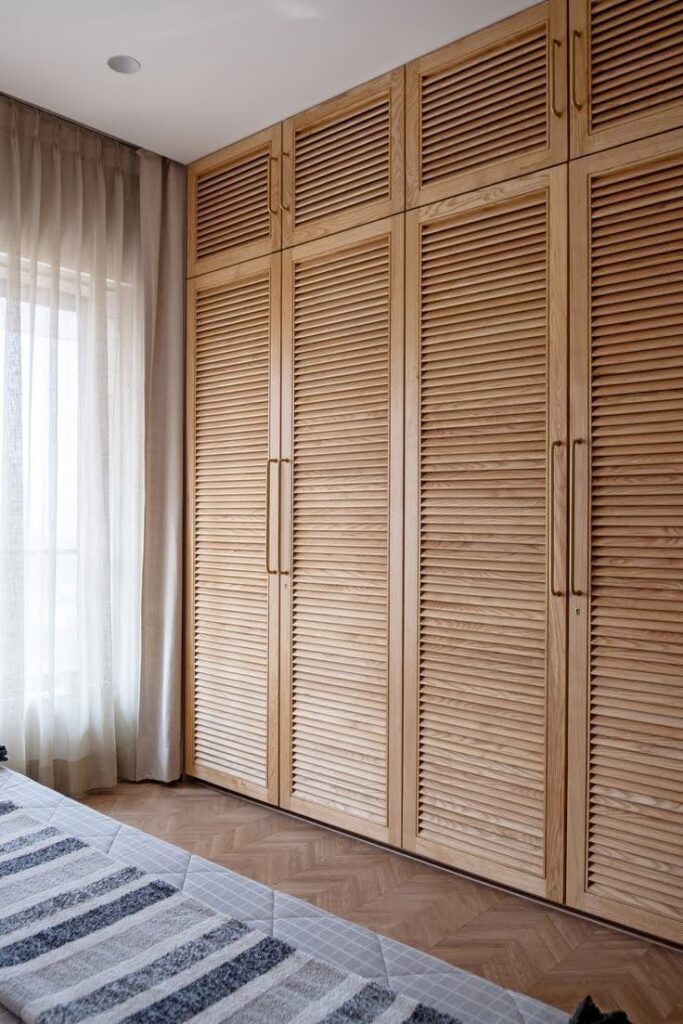
Louvred Wardrobe Doors
Need ventilation for fabrics? Louvred doors come with slatted panels that allow air circulation, keeping clothes fresh.
Perfect for:
- Humid climates
- Linen or fabric-heavy wardrobes
- Rustic or coastal-themed interiors
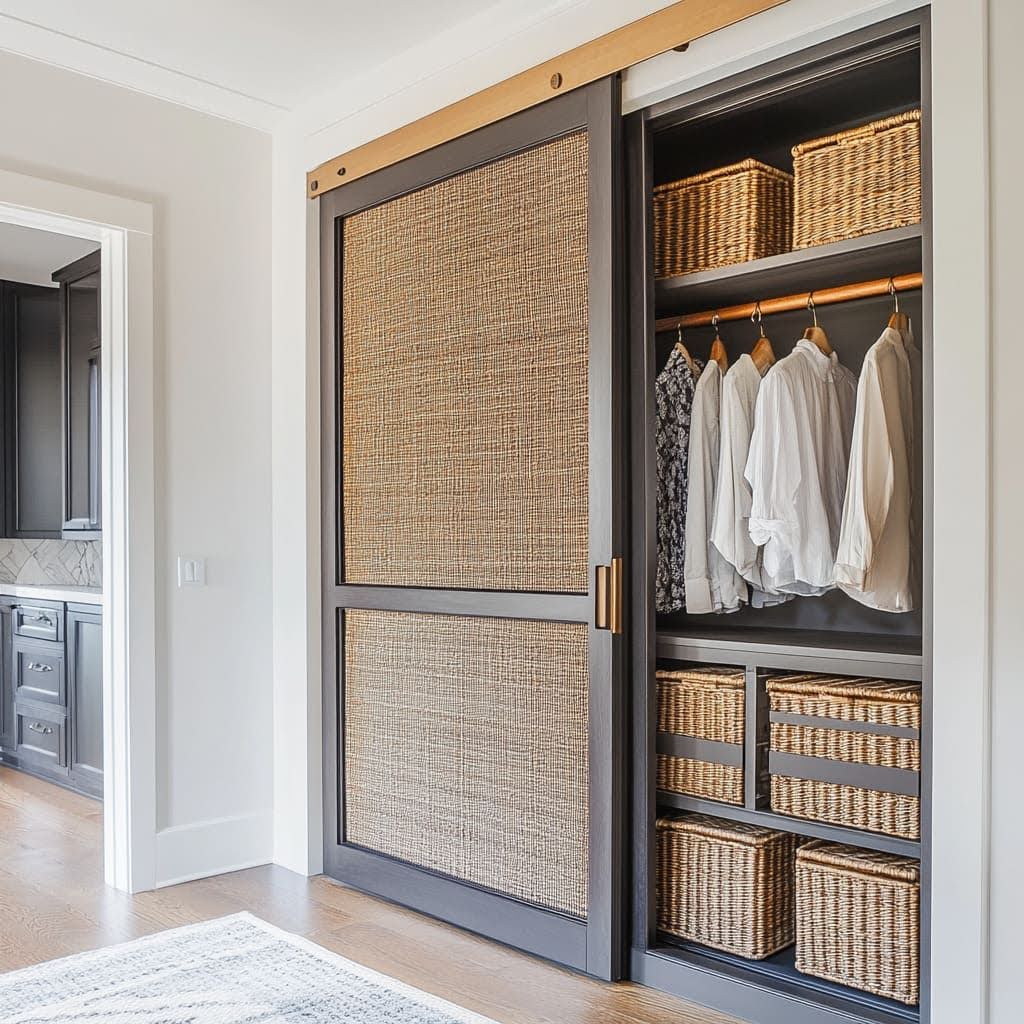
Barn-Style Wardrobe Doors
Inspired by farmhouse aesthetics, barn doors slide along exposed tracks and bring a rustic, stylish vibe to bedrooms.
Why they stand out:
- Unique, trendy appeal
- Great for vintage or industrial interiors
- Durable and bold in design
Customisation Options for Wardrobe Doors
Wardrobe doors can be tailored to match your exact interior goals. Options include:
- Materials – wood, laminate, aluminium, glass, or mirrors
- Finishes – glossy, matte, textured, or natural wood grain
Hardware – handles, knobs, or even push-to-open systems
- Materials – wood, laminate, aluminium, glass, or mirrors
Factors to Consider When Choosing Wardrobe Doors
Before deciding, keep these factors in mind:
- Space availability – Smaller rooms benefit from sliding, pocket, or tambour doors
- Style goals – Modern, rustic, or traditional aesthetics dictate door choice
- Functionality – Frequency of use and ease of access matter
- Budget – Hinged doors are cost-effective, while pivot or barn styles are more premium
- Space availability – Smaller rooms benefit from sliding, pocket, or tambour doors
Conclusion
Wardrobe doors are more than functional panels—they’re design elements that define the style, flow, and efficiency of your space. From sliding and pocket doors that save space to pivot and barn doors that make a bold statement, there’s a perfect type for every interior.
Your wardrobe should be as stylish as it is functional. The right door can make that happen.
Sliding, pocket, and tambour doors are excellent for compact spaces
Sliding doors save space, while hinged doors offer full accessibility. The choice depends on your room size and style preference.
Clean with a glass cleaner and microfiber cloth regularly to keep them streak-free.
Yes! Many modern wardrobes combine sliding with mirrored panels or hinged with glass inserts.
Hinged doors are typically the most cost-effective option, followed by bi-fold doors.